Beneficiary Clauses: 5 Classic Mistakes That Can Ruin Your Inheritance
Have you ever taken the time to reread the small print at the bottom of your life insurance contract? No, not the one about management fees — although it is important — but the one that designates the people who will receive your capital on the day you are no longer here.
This is called the beneficiary clause.
If life insurance were a sports car built for wealth transmission, the beneficiary clause would be its engine. You can have the best contract on the market, with the top-performing supports of 2026, but if your clause is poorly drafted, your strategy risks ending up in the ditch.
As a wealth explorer, I have seen too many families tear each other apart or suffer unnecessary taxation because of a simple poorly phrased sentence or an administrative oversight. Yet, drafting this clause is the most powerful act of your life as a saver.
Today, I propose to walk you through and identify together the 5 classic mistakes that could block your capital or betray your intentions.
Marketing Hook: A poorly drafted clause can ruin an optimization strategy. Is your transmission truly secure? Take the test with our interactive Wealth Diagnosis.
Mistake #1: Settling for the "Default" Standard Clause
This is the most frequent error. When opening a contract, people often check the box: "My spouse, failing that my children born or to be born, in equal shares, failing that my heirs."
It is a safety clause, certainly, but it is rarely optimal.
- It does not take into account the financial situation of your spouse.
- It does not allow for generation-skipping (transmitting directly to grandchildren).
- It does not provide for the protection of a PACS partner or a cohabitant if the terms are not precise.
Thomas's Advice: Your life is unique; your clause must be too. Request a "named" or personalized clause if your family situation falls outside the classic framework.
Mistake #2: Forgetting to Update the Clause After a Life Event
Life is a moving river. A marriage, a divorce, a birth, or unfortunately a death within the family... Every major event should trigger a reflex: check your beneficiary clauses.
The most tragic example? Divorce. If you designated "My spouse, Mrs. X" by her name, and you divorce without changing the clause, Mrs. X could legally receive the capital upon your death, even if you have rebuilt your life for 10 years! Conversely, if you wrote "My spouse" without naming her, it is the person who has the status of spouse at the time of death who will receive the funds.
Thomas's Advice: Once a year, during your wealth assessment, reread your clauses. It’s a 5-minute exercise that can save years of peace of mind.
Mistake #3: Neglecting the "Living or Represented" Mention
This is a technical detail that changes everything. If you designate "my children in equal shares" and one of your children passes away before you, does their share go to their own children (your grandchildren) or is it distributed among your other surviving children?
Without the mention "living or represented", the share of the deceased child is generally distributed among the other siblings. Your grandchildren could find themselves totally excluded from the grandparent's inheritance on this contract.
Thomas's Advice: Systematically use the notion of representation so that your lineage is protected, no matter what happens.
Mistake #4: Drafting That is Too Vague or Imprecise
In 2026, precision is your best ally against an increasingly meticulous administration. Avoid vague terms. If you designate a friend, indicate their birth name, first name, date and place of birth, as well as their current address.
Imprecision can lead to a search for beneficiaries by genealogists, which takes time and is expensive, blocking funds for months or even years.
Thomas's Advice: Be as precise as possible. If you designate an association, indicate its exact name and the address of its headquarters.
Mistake #5: Ignoring the Split of the Beneficiary Clause
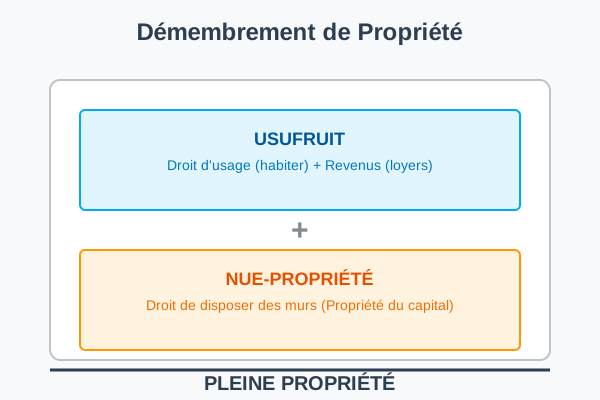
This is the mistake of those who stop at the first level of advice. For large estates, the split (dismemberment) of the clause is a tool of phenomenal power that few use.
The idea? Designate your spouse as the quasi-usufructuary and your children as bare owners.
- The spouse can use the money freely (quasi-usufruct).
- The children have a "restitution claim" on the spouse's estate.
- Result: The surviving spouse is protected while the capital is transmitted to the children with optimized taxation.
Thomas's Advice: If your capital exceeds €150,000, talk to your advisor about the split clause. It is the haute couture of wealth management.
Conclusion: Pick Up Your Pen!
The beneficiary clause is not just a simple administrative formality. It is your last letter to those you love, a clear instruction so that your will is respected.
In 2026, with the increasing complexity of families (blended, international), taking the time to draft a careful clause is the best gift of peace of mind you can give your heirs.
Thomas, your wealth explorer.
Note: Drafting a complex beneficiary clause may require the help of a notary or a Wealth Management Advisor (CGP). Do not face these choices alone.





Commentaires (0)
Soyez le premier à laisser un commentaire sur cet article.
Laisser un commentaire